Remote Team Accountability Without Micromanaging

A reader sent us this question through the blog: How do you keep a small remote team accountable without micromanaging them?
You probably know the moment behind it. It’s 2:40 on a Tuesday. Someone on your team has been “away” in chat for an hour. The thing they promised for Monday isn’t in the shared folder. You start typing “hey, just checking in on…” and stop, because you know how it reads. Then you send it anyway.
Most of us have been on both ends of that message, me included. Here’s what the research says about it, and what to do instead.
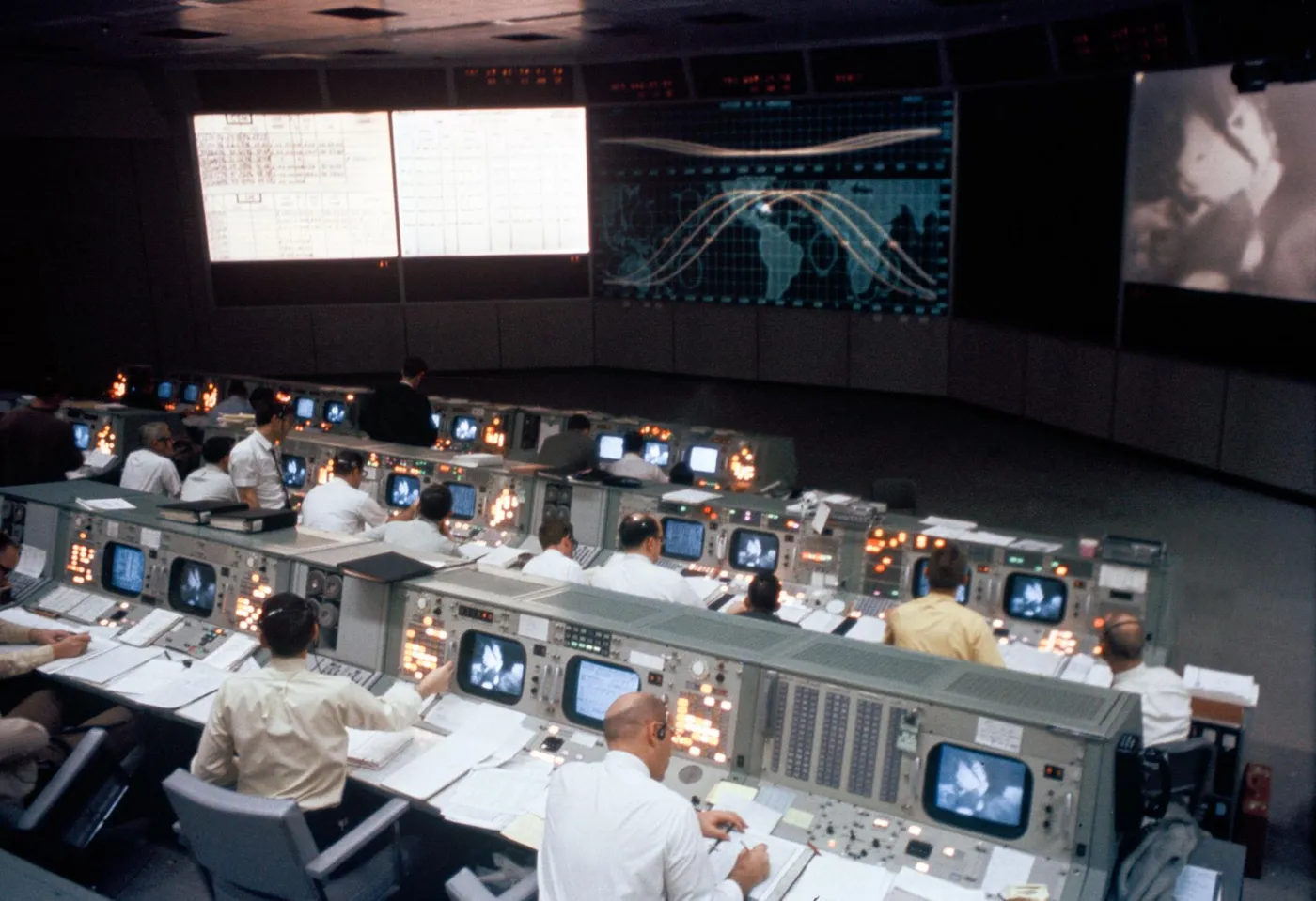
Mission Control, Houston, March 1969. Flight controllers watch a live TV feed from Apollo 9 in Earth orbit: a team running a job none of them can see in person. Courtesy of NASA (photo S69-26301).
The gap is real, and it isn’t about effort
In 2022, Microsoft surveyed 20,006 knowledge workers in 11 countries and found the two sides of that Tuesday message looking at the same week and seeing different things.
Microsoft called it productivity paranoia: leaders worried that work isn’t happening, even when it is. The same report found that only 31% of employees said their manager had ever given them clear guidance on priorities in their one-on-ones.
Put those two numbers next to each other. Managers can’t see the work, so they worry. Employees don’t know which work matters most, so they do a lot of it, but not always the right parts. That’s not a laziness problem. It’s a visibility and clarity problem.
And when one side tested its fears, the fears moved. In a randomized trial of 1,612 employees at a Chinese tech company in 2021–2022, Nicholas Bloom and colleagues let half the staff work from home two days a week. Over two years of reviews, performance grades and promotions didn’t differ, and quit rates fell by a third. The 395 managers in the trial had expected hybrid work to cut productivity by 2.6%. Afterwards, they put it at +1.0%.
One company, one country, one kind of job. But it’s a randomized trial, which is rare in this field, and it’s a good reminder that “I can’t see it” and “it isn’t happening” are different things.
Watching harder doesn’t help
The tempting fix for “I can’t see the work” is software that lets you see the worker: screenshots, keystroke counts, activity scores, the green dot.
The best evidence on that is a 2023 meta-analysis by Daniel Ravid and colleagues in Personnel Psychology. It pooled 94 samples and 23,461 people to ask what electronic monitoring actually does.
Source: Ravid, White, Tomczak, Miles & Behrend (2023), Personnel Psychology 76(1), Table 2.
The authors’ summary is blunt: the results “provide no evidence that EPM [electronic performance monitoring] improves worker performance,” and monitoring “is associated with increased worker stress, regardless of the characteristics of monitoring.” People feel watched and stressed, and the work doesn’t get better.
One finding points the other way, and it matters. Where monitoring was more transparent (people knew what was tracked and why), attitudes toward work were better (ρ = .25), including commitment and satisfaction. Openness about what you look at helps. Secret watching doesn’t.
These are correlations across many different workplaces, not proof of cause in yours. But if the goal is better work, there’s no evidence that watching people more gets you there.
What effective teams have instead
When Google studied 180 of its own teams in Project Aristotle, the researchers found that how a team works together mattered more than who was on it. Two of the five things that set the best teams apart are close to a definition of accountability:
- Dependability: “When my teammates say they’ll do something, they follow through with it.”
- Structure and clarity: people understand what’s expected of them, how to meet it, and what happens based on their performance.
Number one on their list was psychological safety: people can admit a mistake or a slip without being punished for it. That one matters here too. A team that’s afraid to say “I’m behind” will hide being behind, and then you’re back to checking the green dot.
Clarity is also what remote work wears down first. Gallup reported in 2024 that hybrid and fully remote workers saw double the decline in knowing what’s expected of them compared with on-site workers, and that 70% of managers said they’d had no formal training in how to lead a hybrid team. Most of us are making this up as we go.
The fair counterpoint
Some checking is just management. A new hire who’s stuck and quiet needs someone to notice. A client deadline is a deadline. Regulated work sometimes has to be logged. And some people really do drift when nobody’s looking; pretending otherwise isn’t kindness.
So the line isn’t “never check.” Here’s how I’d draw it:
- Accountability looks at the work: what was promised, what got done, what’s blocked. It’s visible to the whole team and it runs both ways.
- Micromanagement looks at the person: where they are, when they’re online, how they spent their hour. It’s usually one-way, and usually a sign the work itself was never made clear.
If you find yourself watching the person, it’s often because you can’t see the work.
What to do instead
- Write down who owns what. One owner per piece of work, with a “done means…” line. “Ana: client deck, done means sent to the client by Thursday” beats “Ana’s on the deck.”
- Agree on outcomes and dates, not hours. Specific, challenging, reachable goals are part of Google’s “structure and clarity.” Nobody needs to know when you’re online if everyone knows what’s due Thursday.
- Put the work where everyone can see it. One shared place for tasks, status and decisions, organized by project instead of by inbox. When the work is visible, you don’t need to watch the people.
- Use one short written check-in a week. Three lines each: what I finished, what’s next, what’s blocking me. It takes five minutes and replaces most of the “just checking in” messages. It also makes progress visible, which matters more than it sounds: in Teresa Amabile and Steven Kramer’s study of 238 people in 26 project teams, making progress on meaningful work was the biggest lift to people’s workdays, yet the 669 managers they polled ranked it dead last as a motivator.
- Make “I’m behind” safe to say early. Thank people for flagging a slip. If saying it gets someone punished, people stop saying it, and you find out on the due date.
- If you track anything, say what and why. The one positive signal in the monitoring research was transparency. Tell the team what you look at, and look at the work, not the keystrokes.
- Fix a missed commitment in private, quickly, and about the work. “This was due Monday and it’s not in. What happened, and what’s the new date?” Then write the new date down where the team can see it.
None of this is new or clever. It’s what you’d do in an office too. Remote work just takes away the hallway that used to cover for skipping it.
Your turn
I’m about to test this myself: three of us in three states are starting a YouTube channel, and we have a history of flaking on each other.
What’s worked on your remote team? And managers: what made you stop checking the green dot, or what keeps you checking it? Tell me in the comments. I read every one.
Sources
- Microsoft Work Trend Index (2022). Hybrid Work Is Just Work. Are We Doing It Wrong? Survey of 20,006 knowledge workers in 11 countries, July–August 2022.
- Bloom, N., Han, R. & Liang, J. (2024). Hybrid working from home improves retention without damaging performance. Nature. Randomized trial, 1,612 employees.
- Ravid, D. M., White, J. C., Tomczak, D. L., Miles, A. F. & Behrend, T. S. (2023). A meta-analysis of the effects of electronic performance monitoring on work outcomes. Personnel Psychology 76(1), 5–40. 94 samples, 23,461 people.
- Google re:Work. Understand team effectiveness (Project Aristotle, 180 teams).
- Amabile, T. & Kramer, S. (2011). The Progress Principle. Harvard Business Review Press. Figures as reported in a review in Canadian Government Executive.
- Gallup (2024). Hybrid Work Indicators.
 JobKick support
Comments
Loading comments…